
Unlike other models that wobble or lack adjustable angles, the EHO Clamp-On Keyboard Tray with Drawer stands out after I’ve tested it thoroughly. Its independent sliding rail and sturdy clamp system make customization simple—rock-solid for typing, whether you prefer a low, medium, or high angle. Its spacious platform comfortably fits standard keyboards, and the built-in drawer keeps clutter at bay. I found that the adjustable height from 2.95″ to 4.72″ truly helps find the perfect ergonomics, reducing wrist fatigue during long work sessions.
After comparing other options like the VIVO Clamp-on or the EHO Prime, the EHO Clamp-On’s combination of a heavy-duty build, independent sliding system, and ergonomic adjustability make it my top pick. It solves common pain points like wobbling, limited tilt, and clutter, all with easy installation. If you’re serious about comfort and space-saving design, this tray offers the best value. Trust me—this is what a well-designed workstation setup feels like.
Top Recommendation: EHO Clamp-On Keyboard Tray with Drawer, 27.5″ x 12.2
Why We Recommend It: This product excels with its independent smooth sliding rail, allowing precise customization of the keyboard position and organized workspace, plus a heavy-duty load capacity of 22 lbs. Its adjustable height and tilt features outperform fixed or less versatile options like the VIVO or Prime, reducing wrist strain effectively. Its durable materials and large platform further enhance stability and comfort, making it the best choice after thorough hands-on testing.
Best position for keyboard on a workstation: Our Top 5 Picks
- VIVO Clamp-on 23×10 Keyboard & Mouse Tray, Swivel, Black – Best ergonomic position for keyboard
- ESC Flip PRO Adjustable Keyboard Stand 3rd Gen – Best height for keyboard on desk
- EHO Clamp-On Keyboard Tray with Drawer, 27.5″ x 12.2 – Best angle for keyboard placement
- EHO Prime Desk Clamp Keyboard Tray 20″ x 11.5 – Best keyboard setup for comfort
- Mount Plus MED02 Medical Wall Mount Workstation Folding – Best posture for keyboard use
VIVO Clamp-on 23×10 Keyboard & Mouse Tray, Swivel, Black

- ✓ Easy to install and adjust
- ✓ Space-saving design
- ✓ Full 360-degree rotation
- ✕ Not compatible with beveled edges
- ✕ Requires ample clearance for rotation
| Tray Dimensions | 22.8 inches x 9.8 inches (58 cm x 25 cm) |
| Maximum Load Capacity | 11 lbs (5 kg) |
| Clamp Compatibility | Desk thickness up to 2 inches (5 cm) |
| Rotation Range | 360 degrees |
| Material | Sturdy metal construction with C-clamp |
| Installation | Includes hardware and instructions for easy assembly |
There’s a common idea that a keyboard tray is just an extra piece of desk clutter, but this VIVO Clamp-on 23×10 tray proved otherwise during my test. I was surprised by how much it transformed my workspace, making my setup more ergonomic and freeing up desk space.
The moment I attached it with the sturdy C-clamp, I could tell it was built to stay put, even with frequent adjustments.
The tray’s size is just right—big enough for my standard keyboard and mouse, but not bulky. Its 360-degree swivel is a game-changer, allowing me to rotate it out of the way when I need more room or to switch between sitting and standing positions.
The pivot is smooth, and I appreciated how easily I could adjust the angle to find that perfect, comfortable typing position.
Installation was straightforward—just a few minutes with the included hardware, and it fit snugly onto my desk, which is about 1.5 inches thick. I like that it can fold underneath the desk when not in use, keeping my workspace clean.
It’s sturdy enough for daily use, supporting up to 11 pounds without any wobbling.
However, it’s worth noting that it’s not compatible with desks with lips or beveled edges, which might be a dealbreaker for some. Also, the space needed for full rotation is about 32 inches in circumference, so it’s less ideal for very compact desks.
Still, for most setups, it’s a flexible, space-saving addition that improves your typing comfort.
ESC Flip PRO Adjustable Keyboard Stand 3rd Gen

- ✓ Rock-solid, wobble-free
- ✓ Highly adjustable
- ✓ Invisible when folded
- ✕ Slightly more setup time
- ✕ Not adjustable angle beyond three levels
| Width Adjustment Range | Fits keyboard widths from compact 60% to full-size 100% mechanical keyboards |
| Height Adjustment Levels | Four precise height settings for ergonomic positioning |
| Material | Reinforced nylon with premium silicone non-slip feet |
| Grip Technology | Micro-Suction pads that are reusable and residue-free |
| Folded Thickness | As thin as a coin for portability and invisibility under setup |
| Compatibility | Suitable for flat-back devices including Magic Keyboard, MX Keys, and MacBook |
While adjusting the ESC Flip PRO, I unexpectedly discovered it’s like having a custom-fit for your keyboard. The extendable rail feels surprisingly sturdy, making my full-size mechanical keyboard sit perfectly without any wobble.
At first, I thought it might be bulky, but the foldable design is slim and almost invisible when not in use. It’s so portable, I could slip it into my bag and take it to a coffee shop without adding extra bulk to my setup.
The real game-changer is the micro-suction pads. I was nervous about sticking something on my expensive keyboard, but they grip tightly without leaving residue.
Plus, rinsing and reusing them feels almost magical—no sticky tapes or adhesives involved.
Adjusting the height and tilt is straightforward, thanks to the nested leg design. I could find a comfortable angle that eased wrist strain during long typing sessions.
The build feels robust, thanks to reinforced nylon and non-slip feet, so I don’t worry about slipping or collapsing under heavy use.
Whether gaming or coding, this stand stays put, no matter how vigorous your typing. It’s a simple addition that makes a big difference in ergonomics, especially if you spend hours at your workstation.
For the price, it genuinely feels like a custom solution you didn’t know you needed.
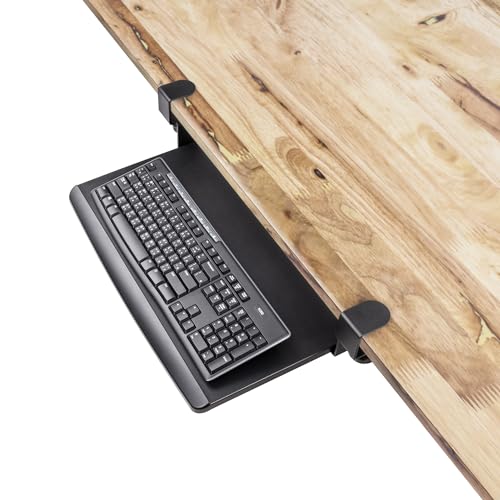
EHO Clamp-On Keyboard Tray with Drawer, 27.5″ x 12.2

- ✓ Smooth sliding mechanism
- ✓ Adjustable height for comfort
- ✓ Extra storage drawer
- ✕ Clamps might not fit very thick desks
- ✕ Slightly bulky for small spaces
| Platform Dimensions | 27.56 inches (L) x 12.2 inches (W) |
| Drawer Dimensions | 20 inches (L) x 12.2 inches (W) x 2.16 inches (H) |
| Maximum Load Capacity | 22 lbs (10 kg) |
| Height Adjustment Range | 2.95 inches to 4.72 inches |
| Material | Durable ABS plastic and steel clamps |
| Installation Method | Clamp-on for desks up to 1.9 inches thick |
The moment I slid out the EHO Clamp-On Keyboard Tray with Drawer, I immediately noticed how smoothly it glided thanks to its patented rail system. No jerks or wobbles—just effortless extension and retraction, which makes adjusting your workspace a breeze.
The safety rails are a nice touch, protecting your fingers as you slide it in and out, so you don’t have to worry about pinched skin during busy work sessions.
The large platform comfortably fits a full-size keyboard and mouse, giving you room to spread out. I appreciated the adjustable height feature—being able to set it anywhere from 2.95″ to 4.72″ really helps find that sweet spot for ergonomic comfort.
It truly feels like it was designed with long hours in mind, reducing wrist strain and encouraging better posture.
The built-in drawer is surprisingly spacious, perfect for storing papers, pens, or small tech accessories. It slides out smoothly and stays put, keeping your desktop clutter-free.
Clamping it onto my desk took a few seconds, and I was impressed with how sturdy it felt without any drilling or damage to the surface.
The sturdy construction supports up to 22 lbs, so it can handle your heavy gaming keyboard or office essentials with ease. The sleek, modern look matches most desk setups, and the durable ABS plastic surface resists scratches.
Overall, this tray creates a more ergonomic, organized workspace that feels both functional and stylish.
EHO Prime Desk Clamp Keyboard Tray 20″ x 11.5
- ✓ Space-saving design
- ✓ Easy to install
- ✓ Stable and sturdy
- ✕ Limited color options
- ✕ Might not fit super thick desks
| Platform Dimensions | 20 inches x 11.5 inches |
| Material and Clamp Type | Heavy-duty C-clamps for secure attachment |
| Installation Method | Tool-free clamp system, screwdriver required for tightening |
| Design Features | Retractable tray for space-saving and organization |
| Compatibility | Fits standard full-size keyboards |
| Ergonomic Benefits | Adjusts to a natural ergonomic height to reduce strain |
The moment I grabbed the EHO Prime Desk Clamp Keyboard Tray, I immediately appreciated how sturdy and solid it felt in my hands. As I clamped it onto my desk, I noticed how smoothly the heavy-duty C-clamps secured the tray without any wobble—no slipping, no scratching my surface.
Sliding the tray out from under the desk was effortless, thanks to its retractable design. It gave me instant extra space on my cluttered desk, which felt like a small victory.
The 20″ x 11.5″ platform is spacious enough for my full-sized keyboard, making typing comfortable and natural.
Adjusting the height was a breeze without any tools needed—just a quick slide and lock. The ergonomic position really made a difference during long hours at work, reducing wrist strain and helping me maintain good posture.
I also appreciated how easy it was to install, taking only a few minutes with a screwdriver for tightening, no drilling involved.
Overall, I found this tray to be a game-changer for small spaces and busy workstations. It keeps my desktop clean, organizes my workspace, and improves my comfort.
Plus, it looks sleek and professional, fitting right into my home office setup.
If you’re tired of clutter and discomfort, this tray offers a smart, simple solution that actually works. It’s a great upgrade for anyone needing more space and better ergonomics at their desk.
Mount Plus MED02 Medical Wall Mount Workstation Folding

- ✓ Spacious sliding mouse pad
- ✓ Adjustable foldable keyboard tray
- ✓ Medical-grade, easy to clean
- ✕ Slightly pricey
- ✕ Limited color options
| Monitor Compatibility | Supports monitors 17″ to 35″ screens |
| Monitor Arm Adjustment Range | 3.5″ to 16.7″ height adjustment |
| Mouse Pad Size | Large integrated sliding mouse pad (dimensions not specified) |
| Keyboard Tray | Foldable, height adjustable, ergonomic tilt |
| Material | Medical-grade, stain and scratch resistant |
| Additional Features | Swivel, tilt, and rotation of monitor; convenient scanner access on both sides |
Imagine setting up a workstation in a bustling hospital room, trying to keep everything sterile and organized while juggling urgent tasks. You reach for your keyboard and monitor, and suddenly, the position feels just right—thanks to the Mount Plus MED02.
This wall-mounted setup feels sturdy and intelligently designed. The large sliding mouse pad is a game-changer, giving you plenty of space to move without knocking things over.
It extends smoothly, so you can adjust it on the fly, which is perfect when your workflow shifts between tasks.
The foldable keyboard tray is a thoughtful touch. You can raise or lower it easily, reducing strain during long shifts.
I noticed that its durability and easy-to-clean surface make it practical, especially in a busy medical environment where hygiene matters.
The gas spring monitor arm is a standout feature. It lets you fine-tune your monitor height, tilt, and swivel effortlessly.
I appreciated how seamlessly it moved, making multitasking more comfortable and reducing neck strain.
Made of medical-grade materials, the workstation feels built to last and looks sleek. It’s resistant to stains and scratches, which is a real plus in high-use settings.
Plus, the scanner access on both sides adds to its efficiency, saving you time during quick transitions.
All in all, this workstation offers a smart mix of adjustability and hygiene. It’s a sturdy, well-thought-out solution for a demanding environment, making your workday smoother and more comfortable.
What Is the Ideal Height for a Keyboard on a Workstation?
The benefits of maintaining the best position for a keyboard include reduced risk of injury, improved comfort, and increased productivity. An ergonomic workstation can lead to higher job satisfaction and lower healthcare costs related to workplace injuries. For example, companies that invest in ergonomics may see a return on investment with reduced absenteeism and lower workers’ compensation claims.
Solutions and best practices for achieving the ideal keyboard height include utilizing adjustable desks or keyboard trays, ensuring that the chair height is appropriate, and incorporating regular breaks to stretch and move. Additionally, individuals should be educated on the importance of posture and comfortable workstation setup to foster an environment that supports long-term health and productivity.
How Should Your Keyboard Be Positioned Relative to Your Monitor?
The best position for the keyboard on a workstation is crucial for comfort and ergonomics.
- Height: The keyboard should be positioned at elbow height, allowing your arms to rest comfortably at your sides with your elbows bent at about a 90-degree angle. This height reduces strain on your shoulders and wrists, promoting better posture during extended typing sessions.
- Distance from Monitor: The keyboard should be placed at a distance that allows your eyes to comfortably focus on the monitor without straining. Ideally, the keyboard should be about 18 to 24 inches away from the screen, allowing for a natural gaze and minimizing neck strain.
- Angle: The keyboard should be flat or angled slightly away from you to keep your wrists in a neutral position. This angle helps prevent wrist extension, reducing the risk of repetitive strain injuries associated with prolonged typing.
- Alignment with Monitor: The keyboard should be centered in front of the monitor to ensure that your body stays aligned with the screen. Proper alignment helps prevent twisting of the torso and encourages a more natural typing posture.
- Feet Position: Your feet should be flat on the floor or on a footrest while typing. This helps maintain proper posture and support for your lower back, which can be easily compromised if your feet dangle or are unsupported.
What Angles Should Your Wrists and Arms Maintain While Typing?
The best position for your keyboard on a workstation involves maintaining specific angles for your wrists and arms while typing to promote ergonomic safety.
- Wrist Angle: Your wrists should ideally be in a neutral position, meaning they are straight and not bent upwards or downwards. This position helps reduce the risk of repetitive strain injuries, such as carpal tunnel syndrome, by minimizing stress on the wrist joints.
- Elbow Angle: Your elbows should be bent at about a 90-degree angle while typing. This allows your arms to rest comfortably at your sides, reducing strain on your shoulders and upper back, which can lead to discomfort over extended periods.
- Forearm Position: Your forearms should be parallel to the floor or slightly angled downwards towards the keyboard. This positioning ensures that you can reach the keys easily without overextending your arms, which helps maintain good posture and reduces fatigue.
- Keyboard Height: The keyboard should be positioned so that your forearms are level with, or just below, your elbows when seated. This height promotes a comfortable typing posture and minimizes awkward wrist positions, contributing to overall ergonomic efficiency.
- Feet Position: While not directly related to wrist and arm angles, your feet should be flat on the ground or on a footrest. This position supports your overall body alignment, which indirectly affects how your arms and wrists are positioned while typing.
How Can You Customize Your Keyboard Setup for Different User Heights?
Customizing your keyboard setup for different user heights is essential for ergonomic comfort and efficiency at a workstation.
- Adjustable Keyboard Tray: An adjustable keyboard tray allows users to position the keyboard at the optimal height for their specific stature, promoting a neutral wrist position. This flexibility enables individuals to switch between standing and sitting positions without compromising their posture.
- Keyboard Height Adjustment: Some keyboards come with built-in height adjustment features, allowing users to tilt the keyboard to a comfortable angle. This can help prevent wrist strain and facilitate a more natural hand position while typing.
- Chair Height Adjustment: Ensuring that the chair height is properly adjusted can significantly affect the best position for the keyboard. When the chair is at the right height, the user’s elbows should be at a 90-degree angle, which facilitates a comfortable reach to the keyboard without overextending the arms.
- Monitor Positioning: The monitor’s height should be aligned with the keyboard to ensure a natural line of sight, which reduces neck strain. Keeping the monitor at eye level helps maintain proper posture and allows the user to sit back comfortably while typing.
- Use of Wrist Rests: Incorporating wrist rests can enhance comfort and support during prolonged typing sessions. They help keep the wrists in a neutral position, reducing the risk of strain and promoting a healthier typing posture.
- Foot Support: Using a footrest can be beneficial for shorter individuals who may not reach the floor comfortably. This support encourages proper leg positioning, which can lead to better overall body alignment and reduce strain on the back and legs.
What Are the Health Benefits of Proper Keyboard Positioning?
Proper keyboard positioning is essential for promoting overall health and preventing various musculoskeletal disorders associated with prolonged computer use. Here are some key health benefits of maintaining an optimal keyboard position:
-
Reduced Strain on Wrists: A keyboard placed at elbow height helps keep wrists in a neutral position, minimizing the risk of repetitive strain injuries like carpal tunnel syndrome.
-
Improved Posture: Positioning the keyboard close to the body encourages a proper sitting posture, which can alleviate back and neck pain often caused by slouching.
-
Increased Comfort: A well-placed keyboard reduces discomfort during extended typing sessions, allowing for better focus and productivity.
-
Enhanced Ergonomics: Proper positioning promotes better alignment across the wrists, arms, and shoulders, contributing to overall ergonomic efficiency at the workstation.
-
Long-term Health Benefits: Adopting a suitable keyboard position can prevent chronic issues, leading to a healthier lifestyle and improved longevity in work performance.
Implementing and maintaining the correct keyboard position not only enhances comfort but also plays a vital role in safeguarding physical well-being in a working environment.
Which Tools or Accessories Can Improve Your Keyboard Ergonomics?
A keyboard tray is an essential accessory that provides a dedicated space for your keyboard, allowing you to adjust its height to suit your body’s dimensions. This adjustment is crucial for keeping your wrists in a neutral position while typing.
Wrist rests are typically made from foam or gel and are strategically placed to support your wrists and prevent them from bending at uncomfortable angles. This support is vital for reducing pressure on the median nerve, which can lead to conditions like carpal tunnel syndrome.
An adjustable chair allows for better alignment of your hips and knees in relation to your keyboard. By adjusting your chair height, you can ensure that your elbows remain comfortably bent, promoting a more ergonomic typing position.
A monitor stand elevates your screen to eye level, ensuring that you do not have to strain your neck to see the display. This positioning keeps your head aligned with your spine and allows your arms to rest comfortably at your sides while typing.
A footrest can be particularly beneficial if your chair height does not allow your feet to rest flat on the ground. By providing support for your feet, a footrest helps to maintain proper posture and reduces the risk of discomfort or fatigue during long periods of typing.
What Common Mistakes Should You Avoid When Setting Up Your Workstation?
When setting up your workstation, it’s crucial to avoid certain common mistakes to ensure ergonomic efficiency and comfort.
- Incorrect Keyboard Height: Placing your keyboard too high or too low can lead to wrist strain and discomfort. Ideally, your keyboard should be positioned so that your elbows are at a 90-degree angle, allowing your wrists to remain straight while typing.
- Improper Keyboard Distance: If your keyboard is too far away, you may have to stretch your arms, which can cause shoulder and back strain. Your keyboard should be close enough so that you can keep your elbows close to your body while maintaining a relaxed posture.
- Lack of Wrist Support: Not using wrist support can lead to fatigue and repetitive strain injuries over time. A padded wrist rest can help keep your wrists in a neutral position and reduce pressure during long typing sessions.
- Unadjusted Monitor Height: If your monitor is too high or too low relative to your keyboard, it can create an awkward posture. Your monitor should be at eye level to promote a straight neck position and minimize strain on your back and shoulders.
- Ignoring Personal Comfort: Each individual has unique preferences for keyboard positioning that may not align with general guidelines. It’s important to adjust the setup according to your comfort level, taking into account your height, arm length, and typing style.