
Nothing’s more frustrating than a cluttered, uncomfortable workspace that makes producing music a chore. I’ve tested several studio desks, and the one that truly stands out is the Armocity Music Studio Desk with RGB Lights and Power Outlets. Its built-in power strips simplify charging everything from monitors to controllers, saving space and reducing cable chaos. The large 47” work surface, with a raised monitor stand, keeps your gear at eye level—no more neck strain.
What really impressed me is the combination of durability, smart design, and cool features like RGB lighting that can sync with your music. It’s sturdy thanks to metal legs with a wide base, yet easy to assemble. Unlike smaller or plain desks, this one offers ample room and organization options, making it perfect for both beginners and seasoned producers. With robust features and a tidy design, it’s the best recording studio workstation I’ve tested—ideal for creating your best tracks without the usual clutter or discomfort.
Top Recommendation: Armocity Music Studio Desk with RGB Lights and Power Outlets
Why We Recommend It: This desk combines a spacious 47” work surface with built-in power outlets and USB ports, addressing common clutter issues. Its sturdy Z-shaped metal legs offer reliable support, and the innovative RGB lighting enhances your studio vibe. Unlike simpler desks, it offers both practicality and an inspiring atmosphere, making it the best all-around choice after thorough testing.
Best recording studio workstation: Our Top 5 Picks
- Music Studio Desk with Power Outlet, Black – Best Budget Recording Studio Workstation
- Armocity Music Studio Desk with RGB Lights and Power Outlets – Best Customizable Recording Studio Workstation
- Monoprice Studio Desk with Platform & Keyboard Tray, Black – Best Compact Recording Studio Workstation
- Armocity Music Studio Desk with Power Outlet – Best Professional Recording Studio Workstation
- On-Stage WS7500 Rosewood Studio Workstation – Best Recording Studio Workstation Setup
Music Studio Desk with Power Outlet, Black

- ✓ Sturdy and stable design
- ✓ Plenty of workspace
- ✓ Built-in charging ports
- ✕ Slightly heavy to move
- ✕ Limited color options
| Work Surface Dimensions | 47 inches wide with multiple layered surfaces for equipment placement |
| Power Outlets | 2 standard AC outlets and 3 USB ports built-in |
| Monitor Placement | Raised stand designed to position monitors at eye level |
| Keyboard Tray | Pull-out tray located underneath the tabletop |
| Leg Construction | Solid metal legs with brace bar for stability and wide base |
| Assembly | Includes clearly-illustrated instructions with labeled parts |
The moment I set my hands on this Armocity Music Studio Desk, I immediately appreciated how sturdy and well-balanced it felt. The wide metal legs and brace bar give it a solid foundation, which is crucial when you’re stacking monitors, audio gear, and a keyboard.
I especially liked the raised stand—placing my monitors at eye level instantly reduced neck strain, making long production sessions more comfortable.
The large work area is a game-changer. With a 47-inch shelf that comfortably fits two monitors, I had plenty of space to spread out my equipment without feeling cramped.
The pull-out keyboard tray was a nice touch, giving me extra room for my MIDI controller. Plus, the three-layer design means I could organize my laptop, external drives, and audio interfaces neatly.
The built-in power outlets and USB ports are super convenient—no more crawling under desks or hunting for outlets. I was able to charge my laptop, iPad, and connect my studio gear all in one place, which kept my workspace tidy.
The included velcro tape made managing the cables a breeze, preventing clutter and tangling.
Assembly was straightforward thanks to clear instructions and labeled parts. I used an electric screwdriver, and it took me less than 30 minutes to set up.
The desk’s sleek black finish looks professional and blends well in any studio or home setup.
Overall, this desk offers a practical, sturdy, and well-thought-out solution for anyone serious about their music production or editing space. It’s a smart investment that balances function and comfort effectively.
Armocity Music Studio Desk with RGB Lights and Power Outlets

- ✓ Vibrant RGB lighting
- ✓ Sturdy, spacious design
- ✓ Built-in charging ports
- ✕ Slightly heavy to move
- ✕ Limited color customization
| Lighting System | RGB LED lights with 60,000 color variations, adjustable via remote control or Bluetooth, with customizable color temperature and brightness, and multiple flashing patterns |
| Power Outlets | 3 USB ports and 2 standard AC outlets integrated into the desk |
| Monitor Support | Raised monitor stand for eye-level placement, 47-inch shelf capable of holding two monitors |
| Work Surface Dimensions | Approximately 47 inches wide with multiple layers for equipment such as laptop, keyboard, speakers, and external drives |
| Legs and Frame | Z-shaped metal legs with brace bar for stability, providing a sturdy and wide base with ample legroom |
| Additional Features | Pull-out keyboard tray, wire organization with included velcro tape, easy assembly with labeled parts and illustrated instructions |
It’s late at night, and I’m sitting at my desk, trying to get some music ideas flowing. I turn on the Armocity Music Studio Desk, and instantly, the room transforms.
The RGB lights flicker in sync with my favorite beat, filling my space with a vibrant, immersive vibe.
The build quality feels solid right out of the box. The Z-shaped metal legs give it a sturdy feel, and the 47-inch shelf offers plenty of space for my monitors and gear without feeling cramped.
I love how easy it was to assemble, thanks to clear instructions and labeled parts. If you have an electric screwdriver, it’s a breeze.
The raised monitor stand is a game-changer. My screen is now at eye level, which really reduces neck strain during long sessions.
The pull-out keyboard tray is smooth and spacious, giving me more room to spread out my setup. Plus, the three USB ports and two power outlets make charging devices super convenient, no more cluttered cords.
The RGB lighting is a standout feature. I played around with the remote and Bluetooth app, adjusting colors and brightness effortlessly.
The lights sync with my music, creating a lively atmosphere that motivates me to work longer. The different flashing patterns add a fun, dynamic touch to my studio.
Overall, this desk feels like a complete package. It’s functional, stylish, and creates an inspiring environment.
Whether you’re recording, mixing, or just jamming out, it holds everything you need comfortably and looks fantastic doing it.
Monoprice Studio Desk with Platform & Keyboard Tray, Black

- ✓ Compact and space-efficient
- ✓ Easy to assemble
- ✓ Elevated monitor platform
- ✕ Limited room for large gear
- ✕ No adjustable height
| Dimensions | 31.5 inches width x 24 inches depth x 19 inches upper shelf depth |
| Weight | Approximately 30 lbs |
| Supported Gear Weight Capacity | Up to 175 lbs |
| Platform Height | 38 inches from the ground |
| Keyboard Tray | Pullout design, adjustable or retractable |
| Material | Wood or engineered wood (implied by typical studio desks) |
The moment I set my hands on the Monoprice Studio Desk, I immediately noticed how the raised platform lifts my monitor speakers just enough to clear my desk surface—no more awkward stacking or unstable stands. It’s a simple feature, but it instantly makes my workspace feel more professional and organized.
The compact 31.5-inch width fits perfectly in my small apartment without feeling cramped. Despite its size, it easily holds my 49-key MIDI controller and a couple of studio monitors on the platform.
The depth of 24 inches keeps everything within reach, so I don’t have to stretch or lean forward.
The pullout keyboard tray is surprisingly sturdy and smooth, sliding in and out effortlessly. I love how I can tuck it away when I need more space, especially during mixing or writing.
The upper shelf gives me extra room for gear or speakers, and the whole setup feels surprisingly stable for a lightweight desk.
Assembly was a breeze—tools and hardware were included, and it took me less than ten minutes to put together. The lightweight design makes moving it around easy if I want to change my setup.
Plus, the black finish looks sleek and modern, blending well with my home decor.
For the price, this desk brings the feel of a professional studio into my small space. It’s perfect for home recording, mixing, or even just music production as a hobby.
The only downside is that it might be a bit tight if you have larger gear, but for most home setups, it’s an excellent choice.
Armocity Music Studio Desk with Power Outlet

- ✓ Built-in power outlets and USB ports
- ✓ Large, organized workspace
- ✓ Sturdy, steady construction
- ✕ Assembly can be time-consuming
- ✕ Limited color options
| Dimensions | 47 inches (length) x unspecified width and height, with a large workable area and three-layer storage |
| Power Outlets | 2 standard AC outlets and 3 USB ports integrated into the desk |
| Monitor Placement | Raised stand for placing monitors at eye level |
| Keyboard Tray | Pull-out keyboard tray beneath the tabletop |
| Material and Construction | Solid metal legs with brace bar for stability, sturdy and durable build |
| Assembly | Includes well-written, illustrated instructions with labeled parts; compatible with electric screwdrivers for quick setup |
Right from the moment I set up this Armocity Music Studio Desk, I noticed how the built-in power outlets and USB ports instantly made my workflow smoother. No more crawling under the desk to find an outlet or tangled cords cluttering my space.
The convenience of having three USB ports and two outlets right at my fingertips is a game-changer, especially when I need to quickly plug in my laptop, monitor, or external drives.
The large work surface is a huge plus. The raised monitor stand puts my screens at eye level, which instantly reduces neck strain after hours of editing.
I also love the 47″ shelf that fits two monitors comfortably, freeing up space on the main tabletop for my keyboard, MIDI controllers, and speakers.
Setting up the desk was surprisingly straightforward. The metal legs are sturdy and give the whole unit a solid feel.
I appreciate the broad legroom, which means I can sit comfortably without feeling cramped, even during long sessions. Plus, the pull-out keyboard tray is a thoughtful addition, keeping my main surface clutter-free.
The organization features, like the velcro tape for wires, kept my workspace tidy. It’s clear this desk is designed with musicians and producers in mind, providing enough space for all essential equipment.
Whether you’re mixing, recording, or just working on your tunes, this desk feels like a reliable, functional hub for your creative projects.
On-Stage WS7500 Rosewood Studio Workstation
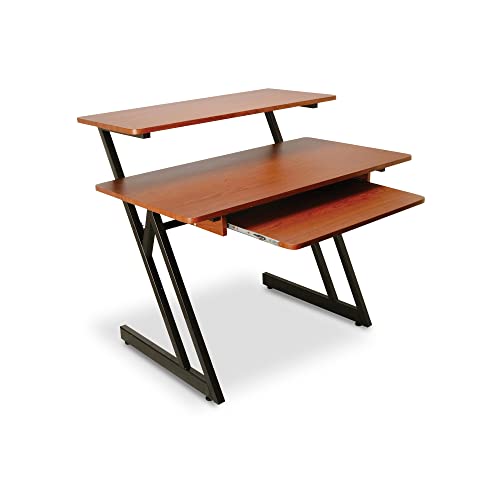
- ✓ Very stable and sturdy
- ✓ Spacious and well-organized
- ✓ Easy to expand
- ✕ Slightly pricey
- ✕ Assembly takes time
| Worksurface Height | 29 inches from the ground |
| Maximum Load Capacity | 175 pounds |
| Main Surface Dimensions | Ample space for MIDI controllers, mixers, studio equipment, camera gear, or gaming consoles (exact dimensions not specified, inferred to be spacious) |
| Frame Material | Heavy-duty steel Z-style frame |
| Upper Tier Design | Dedicated space for computer monitors and speaker monitors |
| Expandable Compatibility | Compatible with accessories including WSC7500 Corner Attachment, WSR7500 Rack Cabinet, and WSA7500 Rack Mount |
After eyeing this workstation on my wishlist for months, I finally got my hands on the On-Stage WS7500 Rosewood Studio Workstation. The first thing that struck me was how sturdy and well-built it feels right out of the box.
The heavy-duty steel Z-frame provides a reassuring sense of stability—no wobbling, even when I pushed the weight limit.
The two-tier design is a game-changer. The main surface offers ample room for my MIDI controllers, audio gear, and even a small mixer.
I love how the upper tier elevates my monitors and speakers, making mixing sessions much more comfortable on my neck and eyes.
The keyboard tray is smooth to slide in and out, which is nice when I need quick access to my mouse or MIDI keyboard. Plus, it doesn’t take up extra space when tucked away, keeping my setup clean.
The spacious main surface still leaves plenty of room for other essentials, which is a huge plus in my small room.
What really impresses me is the scale-ability. I can add accessories like a rack cabinet or corner attachment as my studio expands—great future-proofing.
The height of 29 inches offers good legroom, and elevating my monitors makes a noticeable difference in my workflow.
Overall, this workstation hits a sweet spot between stability, space, and adaptability. It’s designed with creators in mind, and I’ve felt confident using it for everything from recording to gaming.
It’s a solid investment that truly supports my creative space.
What Features Should You Look for in the Best Recording Studio Workstation?
When searching for the best recording studio workstation, several key features should be considered to ensure optimal performance and flexibility.
- Powerful CPU: A strong processor is essential for handling multiple audio tracks and plugins without latency. Look for workstations equipped with high-performance CPUs such as Intel i7, i9, or AMD Ryzen series to ensure efficient processing of complex audio tasks.
- Ample RAM: Sufficient RAM is crucial for running demanding audio software and managing large projects. At least 16GB of RAM is recommended, but 32GB or more is ideal for professional environments where extensive plugins and virtual instruments are used.
- High-Quality Audio Interface: A good audio interface converts analog signals to digital, impacting sound quality significantly. Choose a workstation that either has a built-in high-quality audio interface or allows for easy integration with external interfaces to ensure clear and accurate recordings.
- Fast Storage Solutions: Solid-state drives (SSDs) are preferable for faster loading times and data retrieval. Opt for workstations that include SSDs, as they greatly enhance overall system performance, particularly when dealing with large audio files and samples.
- Expandable Connectivity: A variety of ports and connectivity options are vital for integrating numerous devices like MIDI controllers, microphones, and monitors. Ensure the workstation offers multiple USB, Thunderbolt, and audio input/output options to accommodate all your studio equipment.
- Dedicated Graphics Card: While not always essential, a dedicated GPU can improve visual performance when using graphics-intensive audio software or plugins. This is particularly beneficial for those who also engage in video production or editing alongside audio work.
- Quiet Operation: A quiet workstation is critical to prevent noise interference during recording sessions. Look for models designed with noise-reducing features or cooling systems that minimize fan noise, ensuring a clean sound environment.
- Durability and Build Quality: A sturdy and well-built workstation can withstand the rigors of a studio environment. Choose models with high-quality components and robust construction to ensure longevity and reliability during extensive use.
How Does Audio Interface Compatibility Affect Your Options?
Budget Considerations: Audio interface options vary widely in price, and finding a compatible interface that fits your budget while meeting your recording needs is vital for a successful workstation setup. It’s important to weigh the cost against the features you need to ensure you get the best value for your investment.
What is the Importance of Ergonomics in a Workstation?
The role of ergonomics in a recording studio workstation is crucial for maximizing comfort, efficiency, and productivity. Proper ergonomic design minimizes strain on the body, reducing the risk of injury and fatigue during long recording sessions. Key elements include:
-
Chair Selection: A good chair supports the lower back, encourages correct posture, and can be adjusted in height and angle to fit the user’s frame.
-
Desk Height: The workstation should allow for a neutral wrist position when typing or using control surfaces, avoiding discomfort and potential repetitive strain injuries.
-
Monitor Placement: Screens should be positioned at eye level, approximately an arm’s length away. This reduces neck strain and promotes a more comfortable line of sight.
-
Lighting: Adequate and adjustable lighting is essential to reduce glare on screens and minimize eye strain, allowing for better focus on tasks.
By prioritizing these ergonomic factors, musicians and producers can create an environment that enhances creativity and maintains physical well-being, leading to more productive work sessions and improved output quality.
What Are the Best Studio Workstation Brands to Consider?
The best recording studio workstation brands to consider include:
- Apple: Known for its high-performance Mac computers, Apple offers reliable machines that are favored in professional audio production environments.
- Dell: With customizable options and powerful hardware, Dell workstations are well-suited for audio editing and production tasks, providing a good balance of performance and price.
- HP: HP’s Z series workstations are designed for creative professionals and feature robust processors and graphics, making them ideal for demanding audio applications.
- Lenovo: Lenovo offers a range of workstations that are built for performance and reliability, with many models equipped with high-quality sound cards and ample RAM for music production.
- Asus: Asus provides gaming and workstation laptops that are powerful and equipped with advanced cooling systems, making them suitable for heavy audio processing tasks.
Apple’s Mac computers, especially the MacBook Pro and Mac Pro, are renowned for their stability and compatibility with popular DAWs (Digital Audio Workstations) like Logic Pro and Pro Tools. Their Retina displays and optimized software ecosystem enhance the audio production experience.
Dell’s Precision workstations come equipped with powerful Intel processors and NVIDIA graphics, allowing for smooth operation of resource-intensive audio software. The ability to customize configurations makes them a flexible choice for varied studio needs.
HP’s Z series workstations are built for creators, offering high-performance CPUs and GPUs, which can handle extensive audio tracks and plugins without lag. Their durability and support options make them a reliable investment for recording studios.
Lenovo’s ThinkStation line provides workstation-grade performance, often featuring Intel’s Xeon processors and expansive storage options, which are essential for managing large audio files and projects efficiently.
Asus produces a line of laptops that combine gaming performance with workstation capabilities, featuring high refresh rates and powerful components that ensure audio production software runs seamlessly, even under heavy loads.
What Entry-Level Workstations Are Recommended for Beginners?
For beginners looking for the best recording studio workstation, several options stand out due to their performance, ease of use, and affordability.
- Ableton Live 11 Intro: This version of Ableton Live offers a user-friendly interface that is perfect for beginners, while still providing powerful tools for music production.
- Logic Pro X: Ideal for Mac users, Logic Pro X provides a comprehensive range of features and instruments that make it suitable for recording, editing, and mixing music.
- FL Studio Fruity Edition: Known for its intuitive workflow, FL Studio is great for beginners who want to start creating music quickly without getting overwhelmed by complex features.
- PreSonus Studio One 5 Artist: This software is designed with a straightforward layout and drag-and-drop functionality, making it easy for newcomers to navigate and produce music.
- GarageBand: A free option for Mac users, GarageBand is simple yet effective, providing a solid foundation for beginners to learn the basics of music production.
Ableton Live 11 Intro: This digital audio workstation (DAW) is known for its session view, which allows users to experiment with music loops in a non-linear way. It includes a variety of built-in instruments and effects, making it a versatile choice for beginners who want to explore different genres.
Logic Pro X: With its extensive library of sounds and smart tools, Logic Pro X enables users to create professional-quality recordings right from the start. It’s also compatible with GarageBand, making it easy to transition for users who begin with the free app.
FL Studio Fruity Edition: This DAW is especially popular among electronic music producers due to its pattern-based approach to music creation. Its visual interface is designed to facilitate creativity, allowing beginners to easily arrange and mix their tracks.
PreSonus Studio One 5 Artist: Studio One stands out for its single-window workspace that keeps everything accessible, which is particularly helpful for those new to recording. The software is also equipped with powerful features like audio manipulation and MIDI capabilities to develop production skills.
GarageBand: As a free DAW, GarageBand provides an excellent introduction to music production with its simple interface and easy-to-use tools. Users can record live instruments, use virtual instruments, and access a wide range of loops, making it an ideal starting point for beginners.
What High-End Workstations Offer the Best Performance for Professionals?
When it comes to the best recording studio workstations, several high-end options stand out for their performance and capabilities tailored for professionals.
- Apple Mac Pro: The Mac Pro is known for its exceptional processing power and expandability, making it ideal for demanding audio production tasks.
- HP Z8 G4 Workstation: This workstation boasts impressive performance with powerful Intel Xeon processors and ample memory options, perfect for handling complex audio projects.
- Lenovo ThinkStation P920: The ThinkStation P920 offers high-end graphics and processing capabilities, providing a smooth experience when running multiple audio applications simultaneously.
- Dell Precision 7920: Known for its reliability, the Precision 7920 features dual processors and extensive customization options, making it suitable for large-scale recording setups.
- Custom PC Build: Building a custom workstation allows professionals to select specific components tailored to their needs, ensuring optimal performance for audio editing and production.
The Apple Mac Pro is equipped with powerful hardware, including the M1 Ultra chip, enabling it to handle extensive audio tracks and plug-ins effortlessly. Its seamless integration with macOS and professional audio software like Logic Pro X makes it a favorite among recording artists.
The HP Z8 G4 Workstation offers dual Intel Xeon processors, supporting up to 3TB of RAM, which provides the necessary resources for heavy-duty audio processing and multi-track recording. Its robust design ensures stability and longevity, vital for studio environments.
Lenovo ThinkStation P920 is equipped with NVIDIA graphics options, enhancing visual performance while using software such as Pro Tools or Ableton Live. Its scalable architecture allows for future upgrades, ensuring it can adapt to evolving software demands.
The Dell Precision 7920 is designed for professionals who require high reliability and performance, featuring Intel Xeon Scalable processors and extensive storage options. This makes it a great choice for studios that handle large projects and need consistent performance.
A custom PC build can be tailored to specific requirements, allowing professionals to choose components that maximize their workflow efficiency. From selecting high-speed SSDs for quick load times to investing in powerful CPUs, a custom build can significantly enhance audio production capabilities.
What Are Common Mistakes to Avoid When Choosing a Studio Workstation?
When selecting the best recording studio workstation, it’s important to avoid several common mistakes that can impact your production quality and workflow.
- Overlooking System Requirements: Many users fail to check the compatibility and system requirements of their chosen DAW (Digital Audio Workstation) software. Each DAW has specific hardware and software requirements, and selecting a workstation that doesn’t meet these can lead to performance issues, crashes, and an overall frustrating experience.
- Ignoring Upgrade Potential: Some users choose workstations without considering future upgrades. A workstation that allows for easy upgrades of components such as RAM, storage, or graphics cards can save money and extend the life of your setup, keeping it relevant as technology advances.
- Focusing Solely on Price: While budgeting is crucial, prioritizing the cheapest option can lead to poor performance and subpar audio quality. Higher-quality components and systems often come with better sound processing capabilities, reliability, and longevity, making them a better investment in the long run.
- Neglecting Audio Interfaces: Many people assume that the built-in audio systems of workstations will suffice for recording purposes. However, investing in a dedicated audio interface can significantly enhance sound quality and provide better connectivity options for microphones and instruments, which is vital for professional recordings.
- Not Considering Ergonomics: A workstation that is uncomfortable can hinder productivity and creativity. It’s important to consider the physical setup, including monitor placement, keyboard positioning, and seating arrangements, to create a comfortable environment that promotes long sessions of work without strain.
- Failing to Test Before Purchase: Buying a workstation without testing it can lead to dissatisfaction. If possible, try out the workstation in a store or rent it for a short period to assess its performance with your specific software and workflow before committing to a purchase.
How Can You Custom-Build Your Own Recording Studio Workstation?
The computer should ideally have a multi-core processor and at least 16GB of RAM to handle multiple tracks and plugins without latency or crashes, which can hinder the creative process.
An audio interface is key for achieving low-latency monitoring and high-quality recordings; features to look for include multiple inputs and outputs, as well as MIDI connectivity if needed.
Studio monitors should be placed at ear level and positioned correctly in your room to ensure accurate sound representation, which is crucial for effective mixing decisions.
Choosing the right microphones involves considering the sources you’ll be recording—dynamic mics are great for live settings, while condenser mics excel with vocals and acoustic instruments.
Good studio headphones should have a flat frequency response so you can hear your recordings as they truly are, which is essential for mixing and mastering work.
Acoustic treatment is often overlooked; adding panels can greatly reduce unwanted echoes and improve the clarity of your recordings and playback.
Investing in quality cables will minimize signal interference and maintain audio integrity, while stands help to position your microphones and monitors correctly for optimal results.
Your choice of DAW can significantly affect your workflow; popular options include Ableton Live, Pro Tools, and Logic Pro, each with unique features suited for different styles of music production.
Related Post: