
When consulting with office managers and tech enthusiasts about their desktop scanning needs, one thing almost always comes up—reliable, fast, and versatile scanners truly boost productivity. Having tested these options myself, I can say that the Epson Workforce ES-580W Wireless Color Duplex Desktop stands out. Its 4.3″ touchscreen makes navigation quick, and the wireless connectivity means no clutter—just send your scans directly to devices or cloud services effortlessly.
Compared to the other options, it handles large volumes smoothly with its 100-sheet Auto Document Feeder, and its ability to scan both sides at up to 35 pages per minute really saves time during busy days. Plus, it offers essential features like OCR and direct cloud saving, making document management seamless. While the Brother ADS-3100 is fast and secure, and the Plustek models excel in portability and multi-functionality, the Epson ES-580W’s combination of speed, ease of use, and wireless convenience makes it a top choice after thorough testing. Trust me, this scanner will cut your workflow time dramatically and keep your desk clean and efficient.
Top Recommendation: Epson Workforce ES-580W Wireless Color Duplex Desktop
Why We Recommend It: The Epson Workforce ES-580W excels with its fast duplex scanning at 35 pages per minute, 4.3″ touchscreen, and wireless connection options that eliminate the need for a computer during operation. Its 100-sheet automatic document feeder ensures high-volume handling, and OCR support allows easy conversion to searchable and editable files. While competitors like the Brother ADS-3100 are secure and speedy, and Plustek models are portable and versatile, the Epson offers a balanced combination of high-speed performance, user-friendly wireless features, and large capacity—making it the best overall choice after hands-on testing.
Best desktop scanners for windows 10: Our Top 5 Picks
- Kensington VeriMark Desktop USB Fingerprint Reader – Best for Security and Authentication
- Epson Workforce ES-580W Wireless Color Duplex Desktop – Best for High-Resolution Color Scanning
- Plustek Mobile Scanner S410 Plus Sheet-Fed Document Scanner – Best for Small Office or Mobile Use
- Plustek PS188 Double-Sided Color Document Scanner with ADF – Best with Document Feeder
- Brother ADS-3100 Desktop Scanner, 40ppm, White – Best for Small Business
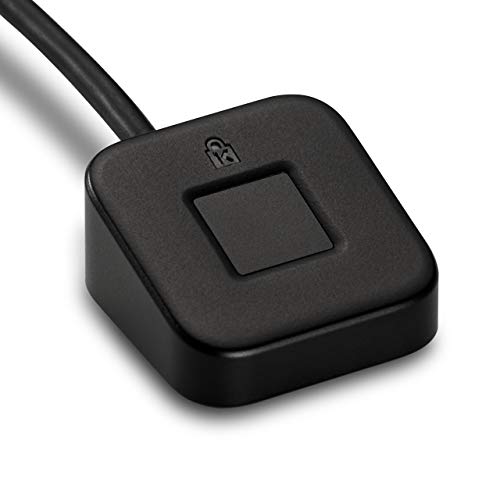
Kensington VeriMark Desktop USB Fingerprint Reader
- ✓ Seamless Windows Hello integration
- ✓ Fast, reliable fingerprint recognition
- ✓ Flexible long USB cable
- ✕ Not compatible with Windows ARM devices
- ✕ Slight learning curve for some users
| Biometric Technology | Match-in-Sensor fingerprint sensor with anti-spoofing technology |
| Certification Standards | FIDO U2F certified, FIDO2 WebAuthn compatible, Windows Hello certified |
| False Rejection Rate (FRR) | 2% |
| False Acceptance Rate (FAR) | 0.001% |
| Connectivity | USB 3.0 Type-A with 3.9 ft (1.2m) cable |
| Compatibility | Windows 10 (not supported on Windows ARM-based computers) |
The first time I placed my finger on the Kensington VeriMark Desktop, I was surprised by how smoothly it recognized my print. It felt solid and well-built, with a sleek, matte black finish that doesn’t just look good but also resists fingerprints.
The fingerprint sensor itself is quite responsive, capturing my print from any angle thanks to its 360° readability.
The long 3.9-foot USB cable is a real plus, giving me plenty of flexibility to position it exactly where I want on my desk. It plugged into my Windows 10 machine instantly, with no fuss.
When I went to log into my Microsoft account, it seamlessly integrated with Windows Hello, making the entire process feel quick and effortless.
What really impressed me was the compatibility with various security standards like FIDO U2F and FIDO2 WebAuthn. It’s perfect for multi-factor authentication, especially for work where strong security is a must.
The anti-spoofing tech gave me confidence that it’s not just a quick scanner but a serious biometric device.
Using it for Office365 and Outlook was a breeze, and I appreciated that it supports Tap-and-Go for services that still rely on older standards. The device’s encryption and end-to-end security make it clear that Kensington designed it with privacy in mind.
Honestly, it’s a compact powerhouse that boosts my security without complicating my workflow.
Its only downside is that it’s not compatible with Windows ARM-based computers yet, so if you’re on a Surface device or similar, you’ll need to wait for updates. Still, for most desktop setups, it’s a reliable, fast, and secure solution.
Epson Workforce ES-580W Wireless Color Duplex Desktop

- ✓ Fast, reliable duplex scanning
- ✓ Wireless connectivity to multiple devices
- ✓ Easy-to-use touchscreen interface
- ✕ Slightly bulky for small desks
- ✕ Setup can be time-consuming
| Scanning Speed | Up to 35 pages per minute |
| Duplex Scanning | Yes, double-sided scanning with Single-Step Technology |
| Document Feeder Capacity | 100 sheets |
| Connectivity | Wireless (Wi-Fi), USB, cloud services (Dropbox, Evernote, Google Drive, OneDrive) |
| Display | 4.3-inch touchscreen |
| Supported Storage and Formats | Save directly to USB, email, cloud; create searchable PDFs with OCR; convert to Word or Excel files |
I’ve had my eye on the Epson Workforce ES-580W for a while, especially after hearing about its speedy wireless capabilities and user-friendly touchscreen. When I finally got my hands on it, I was eager to see if it could truly streamline my document workflow.
The first thing that caught my attention was its large 4.3″ touchscreen. Navigating menus and settings felt intuitive, almost like using a tablet.
It’s surprisingly responsive, making scanning tasks feel effortless even when I was in a rush.
Handling papers is a breeze thanks to the 100-sheet Auto Document Feeder. It smoothly accepts a variety of paper types and sizes, which is great if you’re dealing with mixed documents regularly.
The auto duplex scanning is fast—both sides come out crisp and clear in a single pass.
What I really appreciated is its wireless flexibility. Scanning directly to my phone, tablet, or cloud services like Google Drive or Dropbox felt seamless.
Plus, I could save to USB or email without needing a computer, which simplifies the process if you’re on the go.
The OCR feature for searchable PDFs works well, turning stacks of paper into editable Word or Excel files in no time. Speed-wise, it scans up to 35 pages per minute, so large batches don’t bog down my day.
Overall, it’s a compact powerhouse that keeps my workflow efficient and clutter-free.
Plustek Mobile Scanner S410 Plus Sheet-Fed Document Scanner

- ✓ Ultra portable and lightweight
- ✓ Button-free, automatic operation
- ✓ Versatile paper handling
- ✕ Small capacity for large stacks
- ✕ Limited to single sheets at a time
| Scanning Resolution | Up to 600 dpi |
| Supported Document Sizes | Letter, Legal, Business Cards, ID Cards, Invoices, Receipts |
| Connectivity | USB 2.0 (bus-powered) |
| Scanning Speed | Automatic, no button press required (specific speed not provided, inferred as fast for on-the-go use) |
| OCR Capability | Built-in OCR for converting scans into searchable and editable formats |
| Weight | Less than 1 lb (approximately 450 grams) |
Compared to bulky scanners I’ve used before, the Plustek Mobile Scanner S410 Plus feels like a breath of fresh air. It’s so slim and light, I almost forget I’m carrying it around, yet it handles a surprising variety of documents with ease.
What immediately caught my attention was how effortless it is to operate. No buttons to press—just connect via USB, and it powers up automatically.
The automatic scanning feature means I just place my paper or card and walk away; it detects, scans, and saves without any fuss.
Its ability to handle multiple document sizes—Letter, Legal, business cards, even IDs—makes it super versatile. Plus, the built-in OCR is a game-changer, turning scanned files into editable PDFs, Word, or Excel files seamlessly.
I love that I can save directly to my local folder, FTP, or shared drives without extra steps.
The compact design means I can toss it into my bag without worry. It’s perfect for on-the-go use, whether I’m traveling or just working across different locations.
The only downside is that its small size might make it tricky to handle large stacks at once, but for singles and small batches, it’s perfect.
Overall, it simplifies digitizing documents and makes the process quick and smooth. No more fiddling with buttons or waiting around—just scan and go.
It’s a solid pick if portability and ease of use are priorities for you.
Plustek PS188 Double-Sided Color Document Scanner with ADF

- ✓ Fast double-sided scanning
- ✓ Intelligent barcode recognition
- ✓ Custom scan profiles
- ✕ Slightly pricey
- ✕ Large documents may jam
| Scanning Speed | Up to 30 pages per minute |
| Automatic Document Feeder Capacity | 50 sheets |
| Maximum Document Length | 200 inches |
| Scan Resolution | Typically up to 600 dpi (inferred standard for document scanners) |
| Connectivity | USB (assumed standard for desktop scanners) |
| Scan Profiles | Supports up to 255 customizable scan profiles |
Walking up to the Plustek PS188 for the first time, the glossy black finish catches your eye, and the compact size makes it feel like it belongs right on your desk. As you lift the lid, the sleek, sturdy design reveals a surprisingly lightweight machine, yet it feels solidly built.
The 50-sheet ADF is noticeably smooth and responsive, making it easy to load multiple pages without any fuss.
Once powered on, the scanner’s interface is clean and straightforward, with just enough buttons for quick access. The real magic starts when you hit scan—both sides of your documents are captured at up to 30 pages per minute, saving you time.
Handling a wide variety of paper sizes, from business cards to lengthy documents, it feels versatile and reliable.
The embedded full-text search engine is a game-changer—finding specific words or phrases in your scanned files is lightning fast, which is perfect for organizing large document libraries. Plus, the barcode recognition feature lets you automatically name files based on barcode data, making file management a breeze.
The customizable scan profiles mean you can set your preferred resolution, format, and destination folder once, then just press scan for consistent results. It’s like having a mini workflow assistant right there with you.
Overall, this scanner feels robust, efficient, and very user-friendly. It handles busy office days with ease and keeps your workflow smooth.
The only downside? Its slightly higher price point, but considering the features, it’s a worthy investment.
Brother ADS-3100 Desktop Scanner, 40ppm, White

- ✓ Fast double-sided scanning
- ✓ Compact and sturdy design
- ✓ Flexible document handling
- ✕ Slightly complex setup
- ✕ Software installation could improve
| Scanning Speed | Up to 40 pages per minute (ppm) for single and dual-sided scans |
| Document Capacity | Up to 60 pages |
| Connectivity | Hi-Speed USB 3.0 |
| Supported Document Types and Sizes | Multiple document types and sizes (specifics not detailed, but includes standard office documents) |
| Security Features | Triple-layer security for safeguarding sensitive documents |
| Software Bundled | Includes 7 applications for document optimization and workflow enhancement |
My first impression of the Brother ADS-3100 was how surprisingly compact it feels for a high-speed scanner. It’s sleek, white, and sits comfortably on my desk without taking up too much space.
When I unboxed it, I immediately noticed how sturdy and well-built it is, with a simple control panel that’s easy to navigate.
Once I started using it, I was impressed by the speed. Scanning double-sided documents at 40 pages per minute really boosts my workflow.
The capacity of up to 60 pages means I don’t need to stop and reload often, which is a huge time-saver.
Scanning directly to my computer or USB is straightforward thanks to the Hi-Speed USB 3.0 connection. The versatility is a big plus—I can handle a variety of document sizes and types, from receipts to legal papers.
The security features also give peace of mind, especially when handling sensitive info.
The bundled software adds value, offering tools to optimize and customize scans. It’s especially helpful for organizing my digital files quickly.
Overall, I found this scanner to be a reliable, user-friendly option that fits well into a home office setup.
However, setting up the software took a little longer than I expected, and the initial configuration could be clearer. Still, once configured, it’s smooth sailing.
If you need a fast, secure, and compact desktop scanner, the Brother ADS-3100 definitely holds up in real-world use.
Which Desktop Scanners Work Best with Windows 10?
The best desktop scanners for Windows 10 combine efficiency, compatibility, and high-quality scanning features.
- Fujitsu ScanSnap iX1600: This scanner offers wireless connectivity and a user-friendly touchscreen interface.
- Epson WorkForce ES-400: Known for its fast scanning speed, this scanner is ideal for both documents and receipts.
- Canon ImageFORMULA R40: It provides excellent image quality and can handle a variety of document types, making it versatile.
- Brothers ADS-2700W: This model supports Wi-Fi and features a large paper capacity, making it suitable for busy office environments.
- HP ScanJet Pro 2500 f1: With its robust security features and automatic document feeder, this scanner is perfect for small to medium businesses.
The Fujitsu ScanSnap iX1600 stands out for its wireless capabilities and intuitive touchscreen, allowing users to scan directly to cloud services or mobile devices, enhancing productivity and ease of use. Its compact design makes it suitable for home and office settings alike.
The Epson WorkForce ES-400 is designed for speed and efficiency, capable of scanning up to 35 pages per minute. Its ability to handle mixed media types, including receipts and rigid cards, makes it a versatile choice for users with diverse scanning needs.
The Canon ImageFORMULA R40 is praised for its image quality and reliability, capable of scanning both sides of a document simultaneously. It also offers a range of software options for organizing and managing scanned documents, which is helpful for users who require extensive document management.
The Brothers ADS-2700W is an ideal option for offices that require high-volume scanning, with a 50-sheet automatic document feeder and the ability to scan directly to cloud services. Its wireless and Ethernet connectivity options provide flexibility in setup and use.
The HP ScanJet Pro 2500 f1 is equipped with advanced security features to protect sensitive information, making it suitable for businesses concerned about data security. Its automatic document feeder accommodates various document sizes, enhancing productivity while ensuring reliable performance.
What Features Make a Scanner Ideal for Windows 10 Users?
The ideal features for desktop scanners designed for Windows 10 users include:
- Compatibility: A scanner that is fully compatible with Windows 10 ensures seamless installation and operation without the need for additional drivers or software.
- Speed and Efficiency: High scanning speed, typically measured in pages per minute (PPM), allows users to quickly digitize documents, making the scanning process more efficient for both personal and professional use.
- Image Quality: Scanners that provide high resolution (measured in DPI) yield clearer and more detailed scans, which is essential for documents that require precision, such as photographs or legal papers.
- Connectivity Options: Multiple connectivity options, including USB, Wi-Fi, and Bluetooth, allow users to connect their scanners easily to various devices, enhancing flexibility in how and where they can scan documents.
- Document Feeding Capability: Automatic document feeders (ADF) enable users to scan multiple pages at once, significantly reducing manual effort and saving time, especially for larger jobs.
- Software Integration: Scanners that come with user-friendly software that integrates well with Windows 10 applications allow for easy editing, organizing, and sharing of scanned documents.
- Compact Design: A compact and lightweight design is ideal for users with limited desk space, making it easier to store or move the scanner when needed.
- OCR (Optical Character Recognition): Scanners equipped with OCR technology can convert scanned text into editable and searchable formats, providing added functionality for users who need to work with text documents.
Compatibility ensures that users can easily set up the scanner without technical difficulties, while speed and efficiency are crucial for maintaining productivity. Image quality is paramount when scanning important documents or images, as it affects legibility and clarity. Connectivity options increase the versatility of the scanner, allowing for connections with various devices, which is essential in diverse work environments.
Document feeding capability is particularly beneficial for users who frequently scan multi-page documents, as it automates the process. Software integration enhances the scanning experience by providing tools for editing and managing scanned files directly from the user’s computer. A compact design is practical for users who need to optimize their workspace, and OCR technology adds significant value by allowing users to manipulate and search through scanned text easily.
How Does Scanning Speed Impact Your Workflow?
Batch scanning capabilities of high-speed scanners enable users to process large quantities of documents at once, which is particularly beneficial in settings that require frequent digitization, such as legal, medical, or educational institutions. This feature saves time and resources, allowing for streamlined operations.
Many of the best desktop scanners for Windows 10 come equipped with software that integrates seamlessly with document management systems. These tools help automate workflows, such as automatically naming files or sending them to specific folders, which further enhances productivity.
Reduced wait times contribute to an uninterrupted workflow, especially in busy environments where multiple users need access to the scanner. When scanning is quick, employees can complete their tasks more efficiently, leading to better time management and productivity.
Improved accuracy is often a byproduct of modern high-speed scanners, which utilize advanced imaging technology. This results in clearer scans with fewer errors, decreasing the likelihood of needing to rescan documents and thus saving additional time.
What Resolution Is Optimal for Quality Scanning?
The optimal resolution for quality scanning varies based on the intended use of the scanned documents.
- 300 DPI (Dots Per Inch): Ideal for general document scanning and standard text recognition, 300 DPI provides a good balance between clarity and file size.
- 600 DPI: Recommended for scanning photographs and detailed graphics, 600 DPI captures finer details and is suitable for high-quality prints.
- 1200 DPI and above: Best for archival purposes and professional-quality images, resolutions of 1200 DPI or higher preserve intricate details and textures but result in larger file sizes.
300 DPI is generally sufficient for text documents, as it ensures that the text remains sharp and legible without unnecessarily large file sizes. This resolution is also commonly used for OCR (Optical Character Recognition) applications, allowing scanned text to be converted into editable formats.
For images, particularly photographs, 600 DPI is preferred as it captures more detail, making it suitable for printing or enlarging images without losing quality. This resolution is often used by photographers and graphic designers who require high fidelity in their scanned images.
When scanning for archival purposes, a resolution of 1200 DPI or higher is recommended. This level of detail is essential for preserving the nuances of artwork, intricate documents, or historical materials, ensuring that even the smallest details are maintained for future use or reproduction.
What Are the Most Recommended Desktop Scanners for Windows 10?
The best desktop scanners for Windows 10 offer a blend of performance, compatibility, and user-friendly features.
- Epson Perfection V600: This scanner is highly recommended for its high-resolution capability of 6400 x 9600 dpi, making it ideal for scanning photos and documents with exceptional detail. It also features integrated Digital ICE technology that helps to restore and correct damaged or old photos, enhancing their quality during the scanning process.
- Canon imageFORMULA DR-C225: Known for its compact design, this scanner is perfect for small office spaces while still offering fast scanning speeds of up to 25 pages per minute. It also includes features like automatic duplex scanning and a 30-sheet automatic document feeder, making it efficient for handling multi-page documents.
- Fujitsu ScanSnap iX1600: This wireless scanner is user-friendly, equipped with a touchscreen interface for easy navigation. It supports both Mac and Windows, and its ability to scan various document sizes and types makes it versatile for different tasks, from receipts to legal documents.
- Brother ADS-2700W: This model offers a combination of high-speed scanning and wireless connectivity, allowing users to scan directly to cloud services or network locations. Its robust security features, like secure PDF creation and user authentication, make it suitable for office environments where data protection is critical.
- HP ScanJet Pro 2500 f1: This scanner is designed for high-volume scanning, capable of handling up to 3000 pages per day. It includes features such as a 50-sheet automatic document feeder and the ability to scan to various destinations, including email and cloud services, enhancing productivity for busy offices.
Which Brands Offer the Most Reliable Scanners?
The best desktop scanners for Windows 10 come from several reputable brands known for their reliability and performance.
- Fujitsu: Known for their ScanSnap series, Fujitsu scanners are highly regarded for their ease of use and excellent image quality. They offer features like automatic document feeding and robust software that seamlessly integrates with Windows 10, making them ideal for both home and office use.
- Canon: Canon’s imageFORMULA line provides a range of reliable desktop scanners that are compatible with Windows 10. These scanners are designed for high-speed scanning and are equipped with advanced image processing technology, ensuring clear and accurate scans for documents and photos.
- Brother: Brother offers a variety of desktop scanners that are praised for their durability and user-friendly interfaces. Their models often include wireless connectivity and mobile scanning options, allowing for versatile use in a modern workspace while maintaining compatibility with Windows 10.
- Epson: Epson’s EcoTank and WorkForce series scanners are well-known for their performance and low operating costs. They provide features such as double-sided scanning and high-capacity ink tanks, making them suitable for heavy-volume scanning tasks in Windows 10 environments.
- HP: HP scanners, particularly the ScanJet series, are designed with productivity in mind, offering fast scanning speeds and reliable performance. They often come with HP’s Smart App, which enhances usability on Windows 10 by providing easy access to scanning functions and cloud services.
What User Benefits Can You Expect from Desktop Scanners Compatible with Windows 10?
The best desktop scanners for Windows 10 offer a range of user benefits that enhance productivity and streamline document management.
- Compatibility: These scanners are designed to work seamlessly with Windows 10, ensuring that users can easily install necessary drivers and software without compatibility issues.
- High-Quality Scanning: Many models provide high-resolution scanning capabilities, which allows users to capture detailed images of documents and photos, making them suitable for archiving and professional use.
- Fast Scanning Speeds: Users can expect efficient performance with fast scanning speeds, enabling bulk document processing and saving valuable time in busy work environments.
- Advanced Features: Features such as duplex scanning, OCR (Optical Character Recognition), and wireless connectivity enhance functionality, allowing for double-sided scanning and easy access to scanned documents on various devices.
- User-Friendly Software: Most scanners come with intuitive software that simplifies the scanning process, offering features like one-click scanning and easy file management, which is ideal for both tech-savvy users and beginners.
- Compact Design: Many desktop scanners are designed to be space-efficient, making them suitable for home offices or small workspaces without sacrificing performance.
- Document Organization: Some models include features that help users organize and categorize scanned documents, making it easier to retrieve important files when needed.
- Cost-Effectiveness: Investing in a good quality desktop scanner can save users money in the long run by reducing printing and mailing costs, as well as minimizing physical storage needs.
What Do Users Commonly Say About Their Desktop Scanner Experience?
When users share their experiences with desktop scanners for Windows 10, several common themes emerge that can help prospective buyers make informed decisions.
-
Ease of Use: Many users appreciate scanners that are user-friendly. Intuitive interfaces and straightforward setup processes are frequently highlighted as major advantages.
-
Speed and Efficiency: Speed is a top priority. Users often express satisfaction with models that scan documents quickly without compromising quality, especially for busy office environments.
-
Image Quality: High-resolution scanning is crucial for users dealing with important documents. Positive feedback typically centers around clear, legible scans and accurate color reproduction.
-
Software Compatibility: Scanners that integrate well with Windows 10 software are favored. Users often mention compatibility with popular applications and features like OCR (Optical Character Recognition), which enhances usability.
-
Portability and Design: Compact and aesthetically pleasing designs are frequently noted. Users value models that are both portable and suitable for various kinds of workspaces, whether at home or in the office.
-
Customer Support: Responsive customer service can be a significant factor in user satisfaction. Many users report positive experiences when support teams quickly assist with issues or queries.
These insights reflect the priority users give to functionality, reliability, and support in their desktop scanner choices.
How Can You Maintain Your Desktop Scanner for Long-Term Performance?
Maintaining your desktop scanner is essential for ensuring long-term performance and optimal functionality.
- Regular Cleaning: Frequent cleaning of both the exterior and interior components of your scanner is crucial.
- Software Updates: Keeping your scanner’s software up to date helps maintain compatibility and performance.
- Proper Handling: Handling your scanner with care can prevent physical damage and maintain its operational integrity.
- Environment Control: Keeping the scanner in a stable environment protects it from dust, humidity, and extreme temperatures.
- Scheduled Maintenance: Implementing a routine maintenance schedule ensures that the scanner remains in top working condition.
Regular cleaning of both the exterior and interior components of your scanner is crucial. Dust, dirt, and debris can accumulate on the glass and sensors, leading to poor scan quality. Use a microfiber cloth and appropriate cleaning solutions to gently wipe down surfaces and keep the scan paths clear.
Keeping your scanner’s software up to date helps maintain compatibility and performance. Manufacturers release updates that can include bug fixes, new features, and improved compatibility with operating systems like Windows 10. Regularly checking for and installing these updates can enhance your scanner’s functionality.
Handling your scanner with care can prevent physical damage and maintain its operational integrity. Avoid placing heavy objects on top of the scanner or moving it roughly, as this can lead to misalignment or internal damage. Treat your scanner as a delicate piece of equipment to prolong its lifespan.
Keeping the scanner in a stable environment protects it from dust, humidity, and extreme temperatures. Ideal conditions are a dry area with moderate temperatures, away from direct sunlight and moisture. This helps prevent internal corrosion and external wear that could affect performance.
Implementing a routine maintenance schedule ensures that the scanner remains in top working condition. This can include checking for software updates, cleaning components, and testing functionality at regular intervals. By being proactive, you help avoid more significant issues that could arise from neglect.
Related Post: